Family Dental Care
Children's Dental Health Habits
Build children's dental health habits that last: brush timing, sealants, sports guards and the February dental health month tradition.
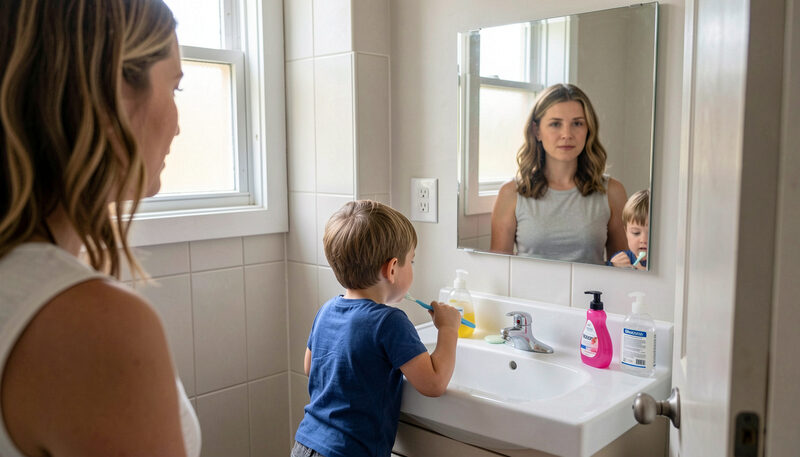
Children's teeth last a lifetime on habits built before the children can spell the word habit, and the school years are when those habits either set or slip. This page, kept at its historical address, covers the practices that carry a child's mouth from the first molars to the braces years: brushing supervision, sealants, sports guards, snacks and drinks, and the February tradition that put children's dental health on the national calendar. It follows the guidance of the American Dental Association and the Centers for Disease Control and Prevention and replaces no examination.
How long should a parent supervise brushing?
Until well past the age most parents stop. A child can hold a brush at two and copy the motion at four, but the fine motor control and the patience for two full minutes arrive slowly, and dental bodies advise adult supervision of brushing until at least age six or eight. Supervised means finished: the parent handles the final pass along the gum line, where childhood decay actually lives, and checks that every surface was reached. The two minute rule, twice a day, with fluoride paste in the age appropriate amount detailed in the family brushing routine, is the single habit with the largest return in these years.
What did February come to mean?
Each February, the American Dental Association runs National Children's Dental Health Month, a tradition that began as a one day observance in the 1940s and grew into a month of school programs, posters and classroom visits. For families, February works as a yearly checkpoint: the month to book the dental checkups, replace the worn brushes and restate the house rules on sweets and drinks. Schools in many rural districts pair the month with sealant programs and fluoride varnish, which makes it the natural moment to return the permission slip. The observance is a calendar anchor, nothing more, but annual anchors are exactly how prevention survives busy years.
Why do sealants matter so much?
Permanent molars arrive around age six with deep grooves on their chewing surfaces, grooves too narrow for a brush bristle to clean. Dental sealants are thin protective coatings painted into those grooves, and the Centers for Disease Control and Prevention count them among the most effective tools against childhood decay, protecting molars for years at a fraction of the cost of filling them. School based programs apply them free in many districts, which matters in counties where a dental visit is a long drive. A parent needs to know two things: the first molars appear around six, behind the baby teeth, and sealing them early is the point.
When does a sports guard enter the picture?
With the first organized sport, and earlier than the first sport for children who ride, skate or climb. A sports guard absorbs the impact that breaks front teeth, and dental injuries cluster exactly in the years children are bravest and least coordinated. Boil and bite guards from a pharmacy fit adequately for most children, and a dentist can make a custom guard when the teeth are permanent and the sport is serious. The guard belongs in the kit bag, not the drawer, and it earns its place next to the helmet described in any family's weekend routine. Habits around safety gear travel together, like the household habits in the family dental care guide.
How do snacks and drinks shape the teeth?
Frequency beats quantity. Teeth tolerate a sweet dessert after a meal far better than a sipped juice or a slow soda across an afternoon, because every sip feeds the bacteria for another stretch of time. The practical house rules are short: water between meals, sweet drinks at the table rather than in the hand, and snacks that lean on cheese, nuts, fruit and vegetables over sticky sweets that cling to grooves. A bottle or sippy cup of anything sweet at bedtime is the classic driver of early childhood decay and earns its own warning in every dental guide, including the first dental visit page.
What should the twice yearly visit accomplish?
A child's dental visit on schedule does four things: it cleans the surfaces brushing missed, applies fluoride varnish where the risk calls for it, checks development so crowding or bite problems are seen early, and repairs what small decay has started while the repair is still small. Skipping visits to save money selects for the expensive version of dentistry later, a trade described from the billing side in the payment options guide, where sliding fee scales apply at community dental clinics as well. The visit is also where a anxious child slowly learns that the chair is boring, which is the best outcome dentistry offers.
How does a family handle a knocked out tooth?
Act calmly and quickly. For a permanent tooth, hold it by the crown, not the root, rinse it gently without scrubbing if dirty, and put it back in its socket if possible, or in milk, and reach a dentist immediately, since the best odds come within the hour. A baby tooth is not reimplanted, but the dentist still wants to see the child. These minutes are worth rehearsing mentally the way the after hours ladder in the patient portal guide is worth rehearsing, because calm at the moment of blood is prepared, not improvised.
Supervise the brushing until age eight, book the February checkup, sign the sealant slip, and keep water as the default drink. MouthHealthy, the consumer site of the American Dental Association, expands on children's dental care by age for families who want the full picture.