Affording and Finding Care
Affording and Finding Care
Find and afford care: community health centers, sliding fee scales, walking programs and the local resources that support family health.
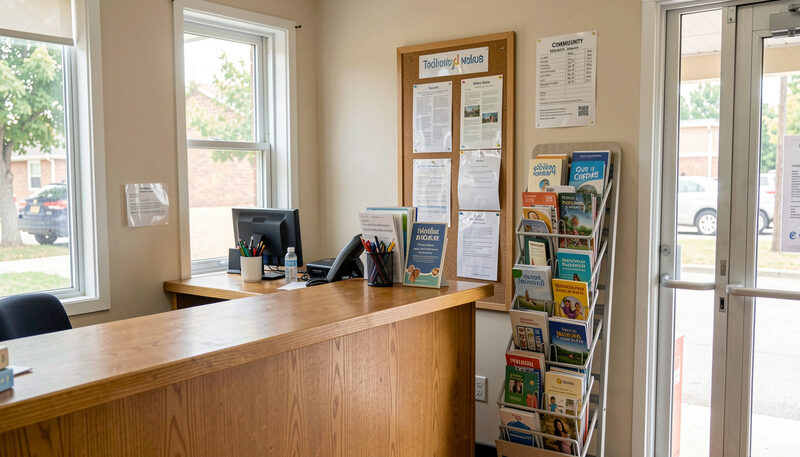
Health care in a rural county is a navigation problem as much as a medical one: the care exists, and the household's work is to find the right door and understand the bill that follows it. This section of The Tideline Journal covers that navigation. It explains the sliding fee scale that community health centers use to charge by income, the proof of income the desk needs, and the community resources, walking tracks included, that keep a family healthy between appointments.
The section is written for households that hesitate in front of the price of care, which is the most expensive hesitation in medicine. Its position is the one the community health center system itself takes: cost is discussed before the visit, openly, with the billing desk treated as part of the care team.
What is a community health center?
A community health center, in the American sense of the term, is a clinic that serves everyone who walks in, insured or not, and adjusts its fees to household income through a sliding fee scale. The federal Health Resources and Services Administration oversees the system, which grew precisely to serve rural and underserved counties, and its site lists every center in the country. A center typically combines family medicine, nursing, behavioral health, dental care and pharmacy services under one roof, the combination this almanac walks through section by section, from family medicine basics to family dental care. For a household counting mileage as well as dollars, the center model matters: several kinds of care at one address means one drive instead of three.
How does the sliding fee scale work?
The scale is a published table that sets the discount by two inputs, household income and household size, measured against the federal poverty guidelines. Below a threshold, services are free or nearly so; above it, the fee slides upward through bands until it reaches the full rate. The scale applies at the window before the visit, and the household that asks for it before the appointment pays the discounted price from the first bill rather than arguing it after the second. The full mechanics, the proof to bring, the questions to ask and the way the bands read, are laid out in the payment options guide, which is the page to read before any first appointment at a center.
What if the household has insurance?
Insurance and the scale work together rather than in competition. Insured households at community health centers still benefit from scale discounts on what the plan does not cover, and the desk applies the better outcome. The separate insurance conversation is its own checklist: whether the clinic is in network, what the plan's preventive coverage includes, since annual physicals and many screenings are covered at no cost under most plans, as described in the annual physical guide, and what the deductible means for the months before it is met. Households with high deductible plans often find that the scale price at a center beats the negotiated insurance price elsewhere, which is worth asking at both desks.
Where does mental health fit the money question?
In the same building and under the same scale, usually. Behavioral health sits inside the community health center model, so counseling carries the same sliding fees as medical visits, telehealth services bill like office visits, and school based counselors see students without charge. The fear of an unpayable therapy bill keeps more households from the first counseling session than the waiting rooms ever will, and the answer is the same desk conversation as any other service, held before the hour is booked rather than after. The mental health section of this almanac, here, frames that conversation alongside its clinical side.
What community resources surround the clinic?
A county's health infrastructure is wider than its clinics, and the wider pieces are usually free. Schools run sealant programs and counseling. Libraries host nurse visits in some towns and provide the internet connection telehealth requires in others. Churches and service clubs organize drives and transportation, the daily constraint in counties where a car is the only road. Public walking tracks, the subject of the community walking track guide, put the cheapest preventive medicine a household can use on the other side of a free door, open in every season.
How does a household plan the year of care?
By writing it down once. A household care plan lists every member's appointments, the screenings due by age from the physical guide, the dental checkups from the children's dental guide, the vaccination dates, and the money side, the scale paperwork gathered once and copied. Families that plan this way use the system instead of being used by it: appointments cluster around shared drives, renewal forms go in before they expire, and no one discovers a missed screening at the wrong age. The plan fits one page, and the page earns its keep every year after.
Start at the right door: read how the sliding fee scale reads before the next appointment, whatever the insurance situation, and walk the free doors meanwhile. The Health Resources and Services Administration maintains the federal locator for community health centers, which finds the nearest sliding scale clinic from any address in the country.
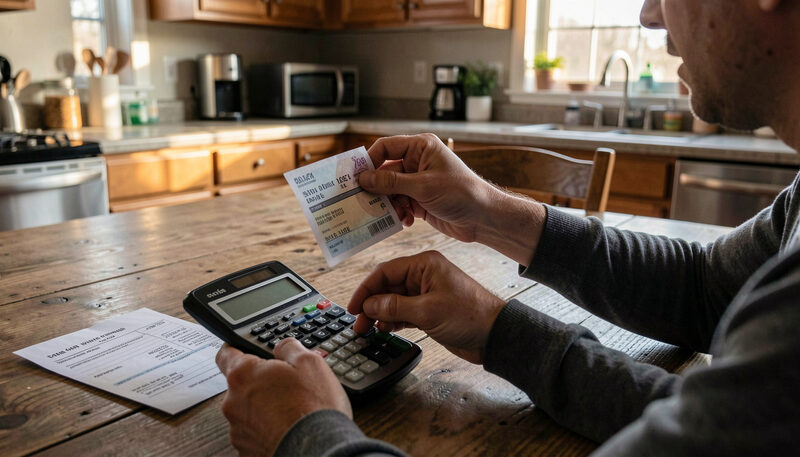
Affording and Finding Care
Payment Options
Read a sliding fee scale before the visit: proof of income, what counts in household size, discounts and billing questions to ask.
The bill adjusts to income, if the desk hears it before the visit.

Affording and Finding Care
Community Walking Tracks
Use a community walking track well: weekly minutes, safe seasons, walking with children and how routine movement supports health.
A measured loop, open every season, free at the door.