Affording and Finding Care
Payment Options
Read a sliding fee scale before the visit: proof of income, what counts in household size, discounts and billing questions to ask.
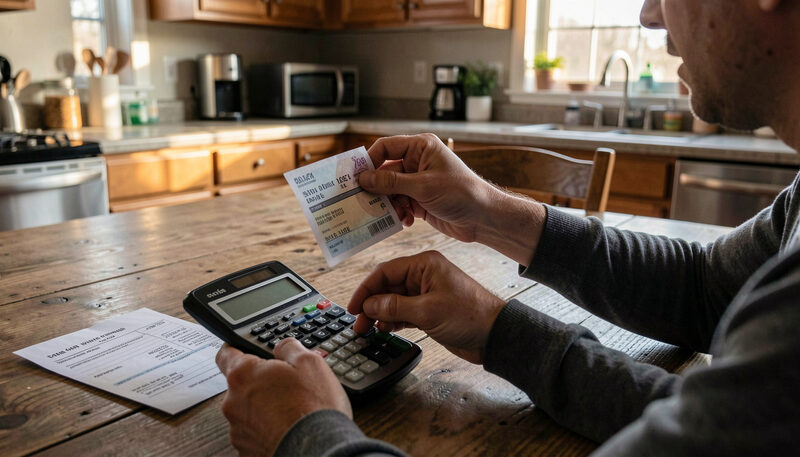
The sliding fee scale is the quiet promise at the heart of American community health care: the bill adjusts to what the household earns, and no one is turned away for lacking the money. Understanding the scale before the visit turns that promise into an actual discount on an actual bill. This page, kept at its historical address, explains how the scale reads, what proof the desk needs, how household size is counted, and which billing questions to ask so the discount applies from the first visit.
Where does the sliding fee scale come from?
From the rules of the community health center program itself. Health centers funded through the federal Health Resources and Services Administration must offer discounts to patients with incomes below twice the federal poverty level, and must serve everyone regardless of ability to pay. That obligation is why the scale exists at thousands of clinics, from small coastal towns to inland cities, and why the locator the administration maintains finds the nearest one from any address. The scale is not charity announced in a back office: it is a published table, posted in the lobby and applied at the window, part of finding and affording care that this section describes.
How does the table read?
Two inputs set the discount: household size across the top, annual income down the side, both measured against the federal poverty guidelines the government republishes each year. Where the row and column meet sits the discount band, stated as a percentage off the full fee or as a flat fee per visit type. Below a threshold the visit is free or costs a nominal amount; above the top band the household pays the full fee, which at a center is often already below the market rate. Reading the table takes a minute and removes the largest unknown in the visit: a household knows what the office visit will cost before the door opens, the same certainty the first visit guide recommends bringing to any new practice.
What counts as household size?
The people the income actually supports under one economic roof: the adults, their dependents, relatives living on the same income. A grandparent on a separate fixed income under the same roof is generally a separate household for the scale's purposes, though practices vary in detail, and the desk answers that question in one minute. Household size moves the discount decisively, since the poverty guidelines rise with each member, so families with several children sit in a more generous band than the raw income alone suggests. The count to give the desk is the honest economic one, and the paperwork backs it.
What proof of income does the desk need?
Enough to place the household in a band, not an audit. Any of the usual documents serves: recent pay stubs, a tax return from the past year, an unemployment or benefits letter, or an employer letter stating wages. Households with no documents, seasonal workers paid in cash, the newly arrived, write a signed statement of income, which centers accept as a category of its own. The paperwork is presented once, renewed on the center's cycle, typically yearly, and copied for each family member's file so every visit carries the same discount. Gathering it once and keeping it in the folder described in the family medicine basics is the entire burden.
Which questions belong at the billing window?
Four, asked before the appointment rather than after the envelope arrives. Does the clinic apply the sliding fee scale, and what proof is needed to enroll? What does the discounted fee cover for the visit type booked, office visit, cleaning, counseling? Which services bill separately, laboratory work, x-rays, and do those carry the same discount? And for insured households: how does the scale interact with the plan, since the center applies the better of the two outcomes? The desk answers these questions daily, and the household that asks them sounds experienced rather than poor. The same four questions serve at the dental suite and the counselor's office, the financial side of the first counseling session and of the first dental visit.
How do uninsured households use the system?
By treating the center as their clinic, fully. An uninsured family enrolls in the scale, pays the banded fee at each visit, and receives the same appointments described across this almanac, physicals, dental checkups, counseling, prescriptions through the center pharmacy at discounted rates. Some states extend further coverage for children and pregnant women through public programs, for which the center's enrollment staff help apply, an ordinary part of the front desk's work. The uninsured household that stays away from care altogether pays the highest price in the system, the emergency visit that prevention would have avoided, which is the arithmetic this section exists to prevent.
What about the bill that already arrived?
It is negotiable after the fact, though less cleanly than before it. The household calls the billing office, asks to be assessed for the sliding fee scale retroactively for visits within the practice's window, and sends the same proof. Payment plans spread what remains across months without interest at most centers, and financial assistance policies exist at hospitals for the larger bills that start there. The productive posture is the same one the portal guide teaches for messages: facts, dates, one specific question, asked at the desk rather than in the parking lot.
Ask about the scale when the appointment is booked, bring one proof of income, count the household honestly, and keep the paperwork in the family folder. The Health Resources and Services Administration maintains the federal health center locator, which lists the sliding scale clinics nearest any address.