Family Dental Care
The First Dental Visit
Why dentists want a first visit by age one, what happens in the chair, and how parents prepare a toddler without fear.
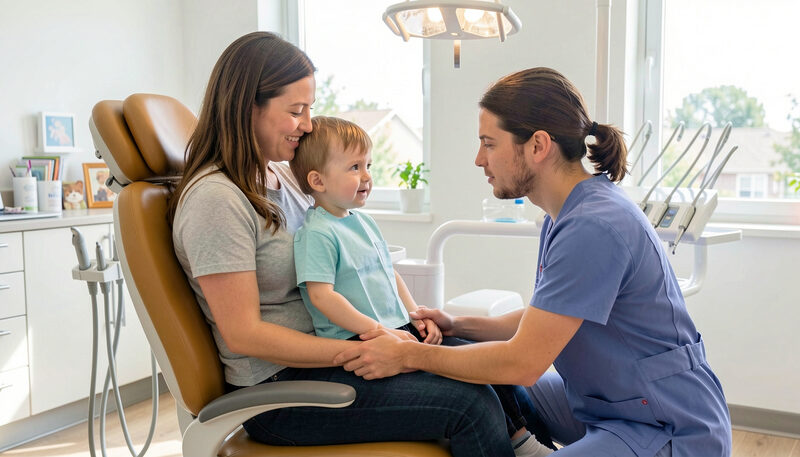
The first dental visit is shorter, earlier and gentler than most families imagine, and its real work is preventive: it finds early decay, sets the home routine and turns the dentist from a stranger into a familiar face. The American Dental Association and the American Academy of Pediatrics both recommend it within six months of the first tooth, and no later than the first birthday. This guide explains what the visit involves, what the dentist is looking for and how a one year old is prepared for it without fear.
Why does dentistry want a visit so early?
Because decay starts before it is visible. A baby's first teeth arrive around six months, and the bacteria that cause cavities begin working on them immediately, fed by bottles, sips and shared spoons. An early visit catches trouble when it is a habit to change rather than a filling to place, and it gives the parents a prevention plan at the exact moment the habits are forming. The visit also builds the record: a dental home that has seen a child at one, two and three knows what that child's normal looks like. Families that wait for pain arrive with the expensive version of every problem, a trade explained from the money side in the payment options guide.
What actually happens in the chair?
Very little chair, at first. With a one year old, the visit is often a knee to knee examination: the parent sits facing the dentist, the child lies back across both laps, and the dentist looks into the mouth with a small mirror while the parent steadies the head. The dentist counts the teeth, checks the enamel, looks at the gums and the attachment of the lip and tongue, and asks about habits: bottle use, sipping, sleeping with a drink, fluoride in the water at home. A cleaning, if any, is a soft brush or a wipe. Fluoride varnish may be painted on, a quick protective coat that sets on contact with saliva. The whole examination takes minutes.
What questions should the parent bring?
Three subjects cover most of the first visit. Feeding: what goes in the bottle or cup, and what the child sips through the day, since frequency of sugar matters more than amount. Home care: how to brush an uncooperative toddler, which the answer involves position, a smear of paste and low expectations of cooperation. Water: whether the household water carries fluoride, from a municipal supply or a well, because the answer decides whether the paste and any supplement carry the whole prevention load. The dentist answers from the child's mouth rather than from a pamphlet, which is the value of an early start over reading alone. Questions about cost and sliding fees belong at the desk before the visit, as with any appointment described in the first medical visit guide.
How is a toddler prepared without fear?
Preparation for a one year old is practical, not explanatory. The appointment lands after a nap and a meal, never at the edge of either. A familiar object travels along, and the parent narrates plainly: the dentist will count your teeth. Rehearsing at home with a toothbrush and a doll, opening wide for a mirror game, keeps the vocabulary ready. What avoids trouble at this age is the parent's own face: a parent who is relaxed produces a child who is curious, and a parent who apologizes for the visit produces a child who objects to it. Dental fear is mostly inherited, and the age one visit exists partly to break that inheritance before it starts, as the wider childhood habits guide describes in the children's dental health page.
What if the child cries?
Crying is expected, tolerated and survivable. A one year old who cries during a two minute examination has still had a complete examination, and the dentist has seen everything needed. The visit is not a test of manners, and postponing it for a calmer season only moves the same minutes to a later date with more teeth involved. Dentists who treat small children have techniques for exactly this, and most parents leave the first visit surprised at how quickly it passed. The goal of the first three visits is not perfection, it is familiarity, the same principle that makes a first counseling session easier the second time.
What comes out of the visit?
A prevention plan, usually written in a few lines: the paste amount for the age, a rice grain smear under three as detailed in the family brushing routine, the bottle and cup guidance, the fluoride question answered for the household water, and the date of the next visit, typically six months out. The family leaves with a dental home, a file started, and a first name to attach to the chair. That attachment is the quiet asset: a child who knows the dental office before anything hurts grows into the adult who books checkups instead of emergency visits.
How often do the visits repeat?
The usual rhythm is every six months, adjusted by risk: a child with early decay signs or deep grooves may be seen more often for varnish and watching, a low risk child sometimes stretches longer on the dentist's advice. The six month interval pairs naturally with the school calendar and with the February observance of National Children's Dental Health Month described in the children's dental health guide, which families can use as the annual anchor for booking.
Book the visit by the first birthday, time it after the nap, bring the feeding and water questions, and let the crying happen if it must. MouthHealthy, the consumer site of the American Dental Association, offers a plain page on dental visits for babies and toddlers for parents who want the details beyond this guide.