Family Dental Care
A Family Brushing Routine
Set a family brushing and fluoride routine: twice daily timing, the right paste amount by age, floss starts and rinsing rules.
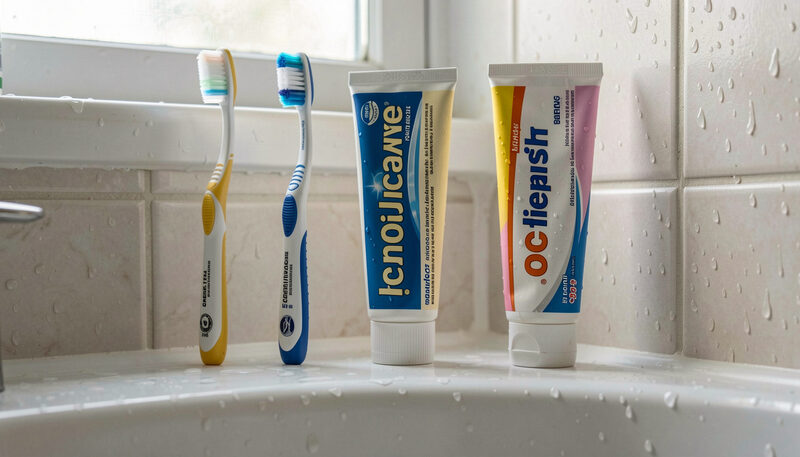
The brushing routine is the cheapest health intervention a household owns, and the difference between a routine and a habit is precision: the right times, the right paste amount for each age, floss arriving when the teeth touch. This guide assembles the whole family routine in one page, following the guidance of the American Dental Association and the Centers for Disease Control and Prevention, from the first smear of paste to the grandparent's electric brush.
What are the fixed times?
Twice a day, two minutes each time, and the pair matters as much as the duration. The morning brush clears the bacterial growth of the night; the evening brush, the one that must never be skipped, leaves fluoride working on clean enamel through the sleeping hours when saliva, the mouth's own rinse, runs slowest. The most protective single brush of the day is the one before bed, after the last food or drink other than water. Families that attach the routine to fixed anchors, after breakfast and before the bedtime story, keep it through school terms and harvest seasons alike, the same anchoring logic that carries a community walking habit through a Maine winter.
How much toothpaste, at which age?
Fluoride paste is measured by age, and the amounts surprise parents in both directions. Under three years: a smear the size of a grain of rice, because a toddler swallows most of what is on the brush. From three to six: a pea sized amount, with an adult still doing the final pass. From six onward: a full ribbon across the brush, spat out rather than rinsed away, since letting a little paste remain extends fluoride's work. The child who cannot reliably spit keeps the pea. These measures come from the dental bodies directly, and they turn the bathroom shelf into a dosing chart: three brushes, three amounts, one routine, as described in the family dental care guide.
What does the two minutes actually cover?
Two minutes divided by a full mouth is short, so the brush must visit every surface rather than revisit the front teeth the hand prefers. A simple order removes the decisions: upper outer from the gum line down, lower outer from the gum line up, then the chewing surfaces, then the inner surfaces that everyone skips, finishing where decay actually lives, along the gum line and behind the back molars. Timers work, songs work, and electric brushes with built in timers work best for children who race. The parent supervising until age six to eight, as recommended in the children's dental health guide, is the quality control on all of this.
When does floss start?
When two teeth touch, which for children happens as the molars arrive around age two to three. Where teeth touch, the brush bristle cannot reach, and the contact points are where childhood cavities hide from even a good two minutes. Floss picks are easier for parents and children than rolled floss, and the even easier tool for wider gaps is the small interdental brush. The adult does the flossing for small children, the same rule as the final brushing pass, and the habit transfers around age eight or nine, when fingers are patient enough. A family that flosses at the same sink teaches it without ever explaining it.
Should the family use mouthwash?
Mostly not, and never as a replacement for anything. A fluoride mouthwash adds protection for adults and teenagers at higher risk of decay, used at a different time from brushing to stretch the fluoride hours, and an antiseptic wash has short term uses a dentist can name. Children under six should not use mouthwash at all, since swallowing it defeats the purpose and adds fluoride beyond the intended dose. The household rule from this routine is short: brushes, paste, floss, and water for rinsing after spitting, with the drinking water itself carrying fluoride where the supply provides it, a point the Centers for Disease Control and Prevention tracks as one of the great public health measures of the last century.
How do brushes, tools and storage differ?
Soft bristles, always, in a size that fits the mouth wearing it. Medium and hard bristles damage gums and enamel while cleaning no better, a persistent myth worth retiring at the shop. Brushes are replaced when the bristles splay, roughly every three to four months, and after an illness that passed through the mouth. An electric brush is not required, though its timer and its tolerance for teenage laziness earn their price in some households. Storage is ordinary and worth keeping ordinary: brushes air dry, stand apart from each other, and never share a cup rim to rim, since the cavity causing bacteria travel between brushes the way they travel between family members.
How does the routine meet the dental visit?
The routine and the visit cover each other's blind spots: the sink handles the daily film, and the twice yearly cleaning described in the first dental visit guide handles the tartar and the grooves. When the hygienist asks about home care, the honest answer, including the skipped evenings, lets the visit adapt, more varnish, a different brush, a targeted floss lesson, instead of guessing. Households managing cost can ask how the sliding fee scale applies to cleanings, the same question framed for medical visits in the payment options guide.
Fix the two times, measure the paste by age, add floss when teeth touch, and let the bedtime brush be the one that never slips. The Centers for Disease Control and Prevention publish their guidance on oral health, fluoride and children's teeth for readers who want the sources behind these measures.