Family Dental Care
Family Dental Care
Family dental care explained: the first visit by age one, children's habits, brushing and fluoride routines that hold for years.
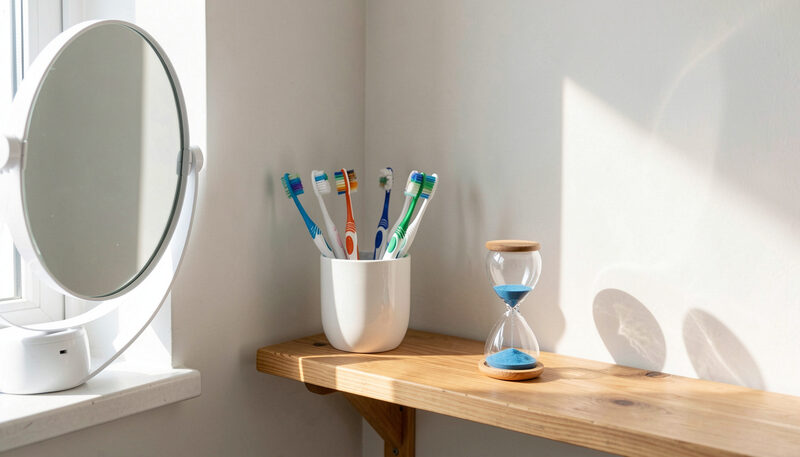
Family dental care is one routine stretched across every age: a first visit near the first birthday, habits learned at the bathroom sink, and maintenance that continues when the children bring their own children to the same chair. This section of The Tideline Journal gathers that routine in one place. It explains the age one visit that pediatric and dental associations recommend, the habits that carry children's teeth through the school years, and the brushing and fluoride rhythm that holds a whole family's mouths in good order.
Dental disease is largely preventable, and prevention is domestic: it happens twice a day at home, with professional cleanings and sealants layered on top. The guides here keep to home practice and to what the dental visit itself involves. They name their sources, from the American Dental Association's consumer library to the Centers for Disease Control and Prevention, and they send every reader back to a dentist for anything that hurts, bleeds or worries.
Why does one family routine work better than four separate ones?
Teeth do not read birth certificates. The bacteria that cause cavities pass between the people who share a kitchen, and a parent with untreated decay can seed a toddler's mouth with the same trouble. That is why a single family routine, same brushing times, same paste rules, same dental home, works better than each member inventing their own. A shared routine also survives busy seasons better, because the trigger is external: when the whole household brushes after breakfast, a seven year old is not deciding anything alone. The guide to a family brushing and fluoride routine sets the times, the paste amounts by age and the floss start in one page.
When does professional care begin?
Earlier than most families expect. The American Dental Association and the American Academy of Pediatrics both recommend a first dental visit within six months of the first tooth appearing, and no later than the first birthday. The visit is short, gentle and diagnostic: it catches early decay, sets a prevention plan and, just as important, teaches the parents what to do at home. Families that wait for kindergarten arrive with three years of unexamined enamel behind them. The walkthrough of the first dental visit by age one covers what happens in the chair, what the dentist looks for and how a toddler is prepared without fear.
What does the dental home provide after that?
A dental home is the practice a family returns to, and its value compounds the way a family practice does. Regular visits, typically every six months, let the same hygienist clean the same teeth, track the same growing jaw and time the interventions: fluoride varnish for a child at risk, sealants on the first permanent molars around age six, a mouth guard when sports start, orthodontic advice when crowding appears. Each of these is cheap next to the filling it prevents. The school years bring their own calendar, from the February tradition of National Children's Dental Health Month to the sports and snack habits that shape adolescent teeth, and all of it is laid out in the children's dental health guide.
How do habits and checkups divide the work?
The honest arithmetic of dental prevention gives most of the work to the sink. Brushing twice a day with fluoride toothpaste removes the film that feeds decay, and fluoride rebuilds the enamel the film weakens between brushings. Professional visits then handle what brushing cannot: hardened tartar, deep grooves that need sealing, and the early lesions only a trained eye and an x-ray find. A family that brushes well and skips checkups eventually pays for the grooves and the lesions; a family that keeps checkups and brushes badly pays for both anyway. The two guides divide the labor exactly: home habits in the brushing routine, chair-side care in the first visit guide.
How does cost shape dental care in rural counties?
Dental care carries a cost question that medical care solved more completely, since dental insurance is thinner and community clinics are fewer. Yet the structure of help exists: community health centers increasingly include dental suites with sliding fee scales, school programs apply sealants and fluoride varnish at no charge in many districts, and state public health offices list the clinics serving nearby towns. The section on affording and finding care explains how sliding fees work and what proof to bring, and the same logic applies at a dental desk as at a medical one. Asking the cost question before the visit, not after the invoice, is the rule that protects the household budget and the appointment calendar alike.
What belongs in a family dental kit?
The kit is small and cheap: a brush per person changed when the bristles splay, fluoride toothpaste in the strength the ages require, floss or small brushes for the gaps, and nothing else that promises to replace brushing. Battery powered brushes help children who brush too fast, timers or a favorite song cover the two minutes, and a cup for rinsing after spitting completes the sink. The full routine, including the rice grain and pea sized paste measures by age, is specified in the family routine guide.
Begin where the family is: a household with a baby books the age one visit, a household with school children reads the habits guide, and every household can fix its brushing rhythm tonight. MouthHealthy, the consumer site of the American Dental Association, publishes plain guidance on home care by age beyond what these pages cover.
Family Dental Care
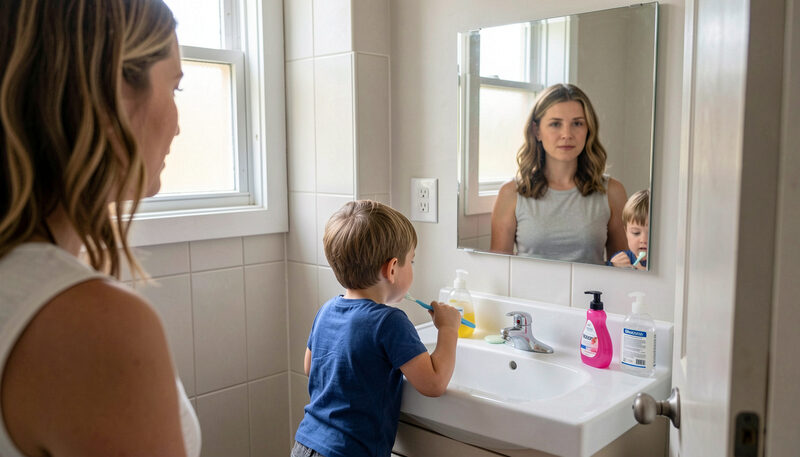
Children's Dental Health Habits
Build children's dental health habits that last: brush timing, sealants, sports guards and the February dental health month tradition.
Supervise to age eight, seal the six year molars, anchor on February.
Family Dental Care
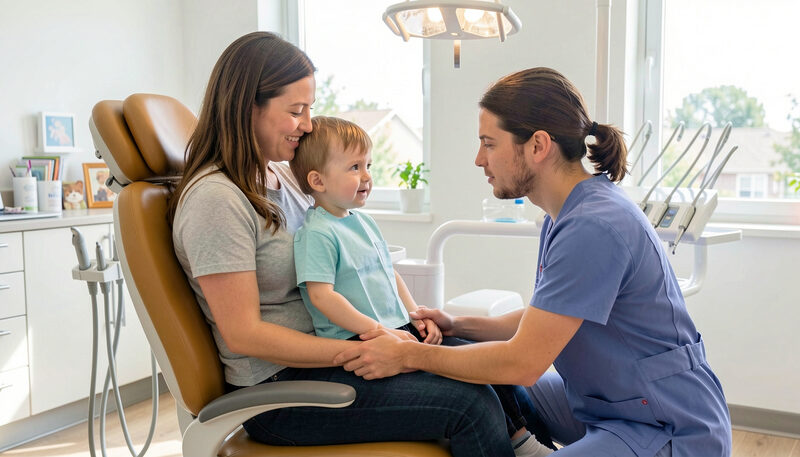
The First Dental Visit
Why dentists want a first visit by age one, what happens in the chair, and how parents prepare a toddler without fear.
Earlier than expected, gentler than feared, over in minutes.
Family Dental Care
A Family Brushing Routine
Set a family brushing and fluoride routine: twice daily timing, the right paste amount by age, floss starts and rinsing rules.
Two fixed times, paste measured by age, floss when teeth touch.