Family Medicine Basics
Using a Patient Portal Well
Use a patient portal well: what belongs in a message, what needs a call, and how after hours and urgent care choices differ in rural areas.
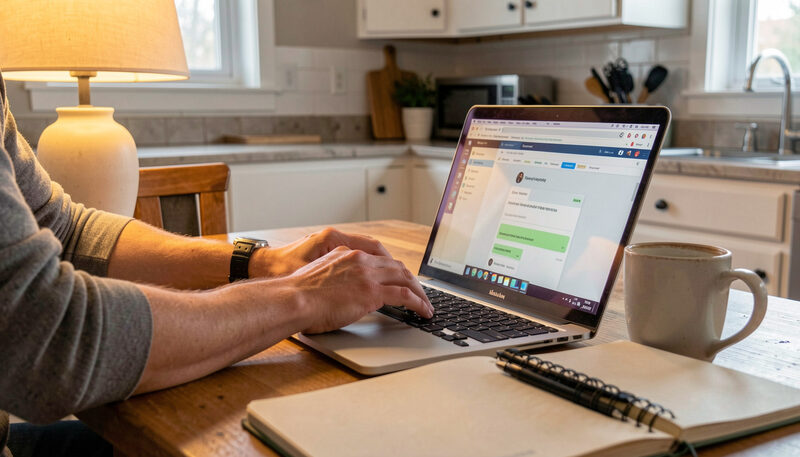
The patient portal is the quiet workhorse of a rural practice: the secure website where a household sees results, renews prescriptions, reads visit summaries and sends plain questions to the care team. Used well, it saves drives and telephone queues. Used wrongly, it delays care that needed a call. This guide sets out what belongs in a portal message, what belongs on the telephone, and where the after hours and crisis options sit, written for households far from the nearest hospital.
What belongs in a portal message?
A portal message is a written note read by staff during business hours, so it suits everything that can safely wait a day or more: prescription renewals, questions about laboratory results, scheduling requests, referral status, and clear factual updates such as a home blood pressure log or a weight record. A good message reads like a memo, not a text. It states the patient name and date of birth, names the medication or result in question in the first line, gives facts with dates, and asks one specific question at the end. Messages that bury the question in a story take longer to answer, because staff route them by their first line. The records habit described in the family medicine basics, one notebook with dates and numbers, makes these messages nearly write themselves.
What still needs a telephone call?
Anything that needs an answer today stays on the telephone: a fever climbing in a child, a medication reaction, pain that started suddenly, a question the nurse must triage by asking follow ups in real time. The telephone also wins for anything the household cannot describe well in writing, and for appointments that must be moved the same day. Portals fail their users most often at exactly this point: a worried family sends a message at night, waits through silence, and loses a day. The sorting rule is simple enough to teach a teenager: if the answer changes what happens tonight, call; if it changes what happens next week, message.
What should never wait for either channel?
Chest pain, trouble breathing, signs of stroke such as face drooping or sudden weakness on one side, heavy bleeding, a severe allergic reaction and serious injuries go to the emergency department by ambulance when needed, with no detour through a message or a hold queue. For a mental health crisis, the United States runs the 988 Suicide and Crisis Lifeline, reachable anywhere by calling or texting 988, day and night, a resource also highlighted in the mental health guide. Rural households do well to write these two routes on paper where the whole family can see them, because the moment that needs them is the worst moment to search for them.
How do results and messages actually arrive?
Laboratory and imaging results are released to the portal as they are finalized, sometimes before the clinician has read them, and a number outside its reference range is not automatically an alarm. Reference ranges differ between laboratories, and flagged values are common in people who are well. The productive response is a message that names the result and asks what it means in context, which is precisely the use case the annual physical guide recommends after blood work. Practices vary in how they flag urgent results, but the reliable pattern holds everywhere: urgent news comes by telephone, and the portal carries the routine.
Who else can see the portal?
Portal access follows the same privacy rules as the paper chart. Parents manage young children's accounts, adolescents in many states hold their own access for sensitive services, and adults can grant proxy access to a spouse or a grown child for an aging parent, paperwork usually completed once at the front desk, as noted in the first visit guide. Households that share a login rather than using proxy access properly create confusion in the record, and occasionally real privacy problems, so the proxy form is the better road. A short family rule about who reads whose results prevents most of the rest.
How does a household keep one portal from becoming five?
Families accumulate logins, one per clinic, one per insurer, one per pharmacy, and the accumulation defeats itself when each password resets on a forgotten evening. The workable system is a single page, printed or written, in the family folder beside the vaccination dates and the insurance cards: each service, its web address, its username and its recovery contact, kept current the day it changes. The page lives where the household papers live, not on the phone of whichever member set the account up, and every adult who might need it at eight in the evening knows where the page is. The fifteen minutes that page costs once repays itself the first night it is needed.
What makes after hours different in a rural county?
When the practice closes, the options narrow to the answering service that reaches an on-call clinician, a telehealth line offered by an insurer or the state, an urgent care in the next town, and the emergency department, which may be half an hour or more away. Each has a ceiling: the on-call clinician advises and prescribes but cannot examine, telehealth sees rashes and coughs but not injuries, urgent care treats walk in problems but not true emergencies, and the emergency department takes everything but at the highest cost in time and money. A household that thinks through this ladder once, before any night needs it, chooses faster and drives less when the fever starts at nine in the evening.
Keep the portal for what can wait, the telephone for what cannot, and 988 or the emergency department for what must not wait at all. MedlinePlus, the consumer health library of the United States National Library of Medicine, explains personal health records and portal access in plain language for readers setting up a household account.