Mental Health and Wellbeing
Helping a Child Through Bullying
Respond to bullying step by step: listening first, recording events, working with the school and when to seek counseling support.
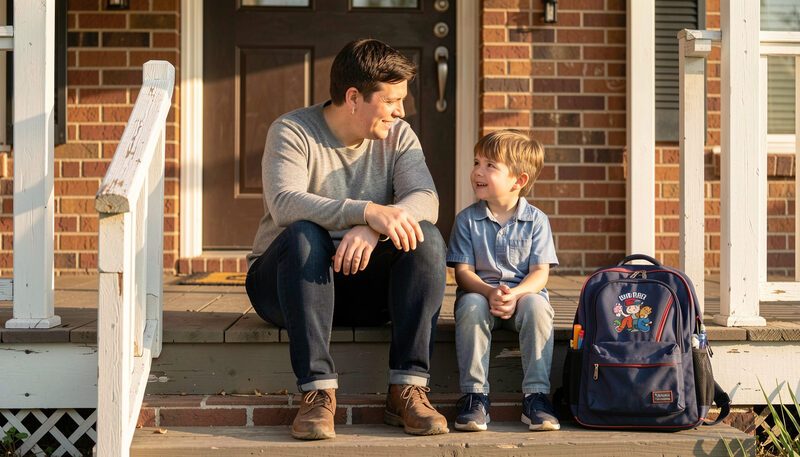
Bullying is a health issue with a school address: it shows up at the clinic as stomach aches and missed sleep, and it is answered at home and at school with a method. This guide gives parents that method in order: listening first, recording what happens, working with the school, supporting the child daily, and recognizing the point where counseling joins the plan. It follows the framework of stopbullying.gov, the federal resource maintained by the United States Department of Health and Human Services, and it replaces no individual school policy or clinical advice.
What counts as bullying?
Stopbullying.gov defines bullying by three features: unwanted aggressive behavior, a real or perceived imbalance of power, and repetition or the threat of it. The behavior travels in old and new channels, physical, verbal, relational through exclusion and rumors, and the online channel that follows a child home on the same phone the family pays for. A single fight between equals is conflict, not bullying, and the distinction matters because the responses differ. The definition also matters at the school desk: a report framed with dates, places and repetition maps onto policy, while a report framed as a feeling maps onto sympathy.
Why does listening come before acting?
Because the first conversation decides whether there will be a second. A child who brings home a bruised story is testing whether reporting works, and the parental reaction is the result of that test. The effective listening is slow: the child tells the whole story, the parent asks what happened next rather than what the child did wrong, and the immediate plan is made with the child rather than announced to the child. Confronting the other family, calling the other child by name at the supper table or promising a rescue the parent cannot deliver all close the channel. The federal guidance is blunt on this point: children stop reporting when the reaction teaches them that reporting makes things louder.
What should be written down?
A short factual log, kept while events are fresh: dates, places, what was said or done, who was present, and any messages or screenshots preserved with their timestamps. Screenshots matter especially online, where posts vanish and accounts rename themselves. The log serves two readers, the school, which acts on patterns, and any later counselor or clinician, who measures harm and recovery against it. Written records also steady the parent, converting alarm into evidence, the same conversion that home blood pressure logs perform for the annual physical.
How does the school meeting work?
Calmly, in writing, and on the record. The parent requests a meeting with the teacher or school counselor, brings the log, states facts with dates, and asks for the school's plan and a follow up date. Schools act on their own policies, and the meeting's job is to put the facts in front of the person whose job it is to apply them. Escalation has an order, teacher or counselor, then principal, then the district, and each step works better when the previous one left a written trace. Threatening language or a demand for punishment of the other child usually stalls the process, while a request for a supervision plan, a seating change, a bus arrangement, moves it. Rural schools are small, which cuts both ways: the staff know the children well, and everyone meets at the store afterwards, which is one more reason the tone stays factual.
How is the child supported meanwhile?
Through structure and company. The supported child keeps the routines that work, regular meals, protected sleep, the activity described in the community walking guide, and keeps contact with the friends and cousins who buffer the school day. At home the parent rehearses responses with the child, where to walk, whom to stand near, what to say loudly, because a practiced script lowers fear even when it is never used. The online part gets boundaries rather than confiscation: charging the phone outside the bedroom at night protects sleep without cutting the child off from the friends on the same network. What the parent watches for is the sign that the burden has outgrown the coaching, changes in sleep, eating, school refusal, or talk that turns on itself.
When does counseling join the plan?
When the signs persist or deepen: sleep and appetite changes that hold for weeks, school refusal, self blame that coaching does not move, or any talk of worthlessness and self harm, which is a clinical matter immediately rather than eventually. A counselor gives the child a private room to process what the parent cannot witness, and the first appointment has the same gentle, administrative shape as any other, described in the first counseling session guide. School counselors can start this work inside the building, and community health centers extend their sliding fee scales to it, the cost questions being the ones framed in the payment options guide. Counseling here is not an admission of defeat, it is the same move as a dental visit for a toothache.
What about the child doing the bullying?
Parents get that call too, and the method inverts without changing character: calm listening, facts from the school, and the search for what the behavior is doing for the child, because aggression at school is rarely contentment at home. The school's plan is joined rather than fought, and a counselor is engaged early, since the conduct responds to the same structured help. The federal guidance addresses both sides of the dynamic, and the parent who models accountability in that meeting teaches more than any lecture.
Listen first, write the log, meet the school with facts, keep the routines, and add a counselor when the signs persist. Stopbullying.gov, the federal resource of the United States Department of Health and Human Services, expands every step of this method on its pages for parents and educators.